Quick answer: Basement floor coating vs. paint comes down to bonding, not just color. Paint is a thin surface layer that flakes and lifts once ground moisture pushes through the slab. A professional floor coating is a bonded, multi-layer system that seals into the concrete, tolerates moisture, and holds up for years. For a Portland, OR or Vancouver, WA basement, where Pacific Northwest moisture is constant, a coating is the finish built to last.
Floor paint and a floor coating are not the same thing, and mixing them up is the most common basement flooring mistake homeowners make. Paint is a thin layer of color that sits on the surface of the concrete and tends to wear, chip, and peel, especially in a damp basement. A floor coating is a bonded, multi-layer system that seals into the concrete, tolerates moisture, and holds up for years of real use. Here’s exactly how the two differ, why it matters more in a basement than anywhere else in the house, and where each one belongs.
Basement Floor Coating vs. Paint: The Mistake Homeowners Make
It’s easy to assume that a can of gray “concrete floor paint” from the hardware store does the same job as a professional basement floor coating. They look similar in the bucket and both change the color of your floor, so why pay more for a coating?
The problem shows up months later, when the paint starts flaking near the walls, lifting where moisture pushes up through the slab, and wearing thin in the walking paths. The two products aren’t competing versions of the same thing. They’re built differently, bond differently, and last for very different lengths of time — which is the whole basement floor coating vs. paint question in a nutshell.
What Floor Paint Actually Is
Floor paint, including the latex and oil-based “porch and floor” products, is essentially colored paint formulated to be a little tougher than wall paint. It goes on thin, sits on top of the concrete rather than bonding into it, and relies on the surface staying dry and clean.
In a basement that sees traffic and moisture, that thin surface layer is exposed to everything: foot traffic, rolling loads, and vapor rising through the slab. Paint has no real system underneath it to resist those forces, so over time it gives way.
What a Floor Coating Actually Is
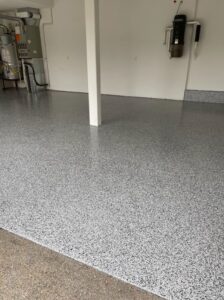
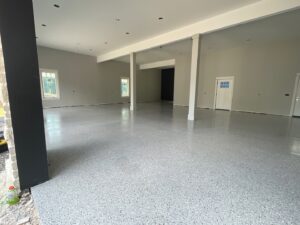
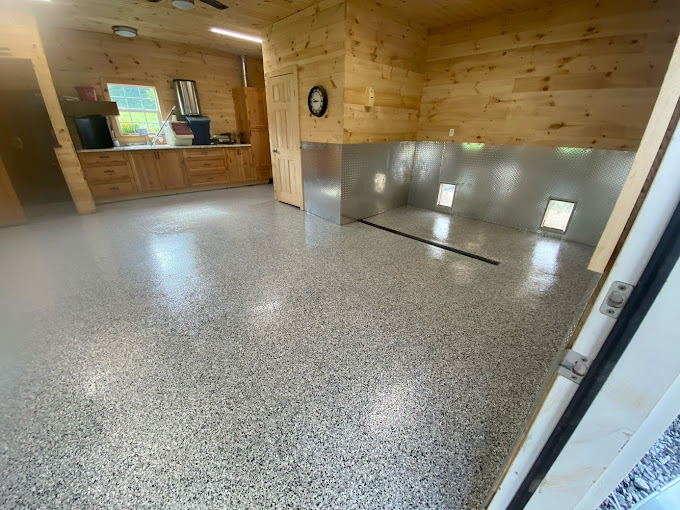
A professional floor coating is a layered system, not a single product. It typically starts with a basecoat that bonds deep into properly ground concrete, adds a broadcast layer of flake or color, and finishes with a clear topcoat that takes the daily wear.
Because the base layer grips the slab and the whole system is measured in real thickness rather than a thin skin of color, it seals the concrete and stands up to moisture, abrasion, and impact. This is what we install for basement floor coatings, and it’s the same category of system used on garage floor coatings and commercial floors that see heavy use. You can see the layer-by-layer breakdown on our 4-step coating process page.
Basement Floor Coating vs. Paint at a Glance
| Feature | Floor Coating | Floor Paint |
|---|---|---|
| What it is | Bonded multi-layer system | Thin surface color |
| Bond to concrete | Grips into a ground slab | Sits on the surface |
| Moisture tolerance | High, sealed system | Low, prone to lifting |
| Durability | Years of heavy use | Wears and peels sooner |
| Cleaning | Wipes clean, sealed | Stains and absorbs more |
| Surface prep | Diamond grinding | Light cleaning, often minimal |
Why Basements Are So Hard on Paint
Basements sit below grade, surrounded by soil that holds water, so moisture is always trying to move up through the concrete. That vapor is the single biggest reason floor paint fails down there. As moisture pushes up, it gets trapped under the paint film and breaks the weak bond, so the paint bubbles and peels.
Here in the Pacific Northwest, where wet ground and long rainy stretches are the norm, that pressure is even higher. A sealed coating system is designed to handle it, and for slabs with heavier moisture we can pair the floor with moisture mitigation to protect the finish from the start. This isn’t unique to our region — Building Science Corporation’s guide to understanding basements outlines how ground moisture constantly migrates through a basement slab and why a capillary break and vapor barrier matter for any finished basement floor.
Paint fights moisture and loses. A bonded coating system is built to live with it, which is exactly what a Pacific Northwest basement needs.
Basement Floor Coating vs. Paint: Signs Your Current Floor Is Failing
If you already have a painted basement floor, watch for these warning signs that the surface is breaking down rather than just showing normal wear:
- Flaking or peeling near the walls, where moisture typically enters first
- Bubbling or lifting patches in the middle of the floor
- A chalky residue that transfers onto shoes or storage boxes
- Discoloration or dark patches that suggest trapped moisture underneath
- Paint that wore through completely in high-traffic walking paths
Any of these point to moisture vapor transmission through the slab, which is a documented cause of coating and paint adhesion failure across the flooring industry, not just a Pacific Northwest problem.
When Floor Paint Might Be Fine
Paint isn’t useless. For a low-traffic space, a dry upper-level utility room, or a quick cosmetic refresh you don’t expect to last, floor paint can do the job for a while and costs less to apply up front. If the slab is genuinely dry, the area rarely gets used, and you’re comfortable redoing it down the road, paint is a reasonable short-term choice.
The trouble is that most basements don’t fit that description. They deal with moisture and they get used, and that’s where paint’s limits show up fast.
Which One Should You Choose?
If you want a basement floor that looks finished, resists moisture, cleans up easily, and stays put for years, a coating system is the answer. If you truly need a temporary cosmetic layer on a dry, rarely-used slab, paint can bridge the gap.
For most Portland, OR and Vancouver, WA area homeowners turning a basement into usable living, storage, or hobby space, the coating is the finish worth investing in. Our residential coating services cover the full range of systems we install, and if you’re weighing coating chemistries beyond basement-specific needs, our post comparing epoxy vs. polyaspartic coatings is worth a read too. We also install urethane and polyurea systems for basements with heavier moisture concerns, and independent industry research on concrete moisture mitigation backs up why permeance and proper prep matter more than the coating color you pick.
Frequently Asked Questions
Is basement floor paint a waste of money?
Not always. It’s a reasonable low-cost option for a dry, low-traffic area you’re willing to redo later. In most basements, though, moisture and regular use cause it to fail faster than homeowners expect.
How long does a basement floor coating last compared to paint?
A properly installed, bonded floor coating typically lasts for years of heavy use, while floor paint in a damp basement often shows flaking or lifting within months to a couple of years.
Can I put a floor coating over old, peeling paint?
No. Old paint has to be ground off along with the top layer of concrete so the new coating can bond directly to the slab. Coating over failing paint just traps the same problem underneath.
Does every basement need moisture mitigation before coating?
Not every basement, but many do, especially older homes or slabs with a history of dampness. We test moisture levels as part of the estimate and recommend mitigation only where the slab actually needs it.
What areas do you serve for basement floor coatings?
We’re based in Portland, OR and serve the Portland metro, Vancouver, WA, SW Washington, and nearby areas, including Portland and the surrounding suburbs.
Basement Floor Coating vs. Paint: Ready to Use Your Space Again
A properly coated basement floor is the difference between a damp storage area and a room that feels like part of your home. As a family-owned and operated company, we build moisture-tolerant, easy-to-clean floors designed for real Pacific Northwest basements, and we’ll tell you honestly what your slab needs before we start.
Call (971) 247-9844 or request a quote to talk through your basement floor coating vs. paint decision. We’re based in Portland, OR and serve the Portland metro, Vancouver, WA, and SW Washington and nearby areas.