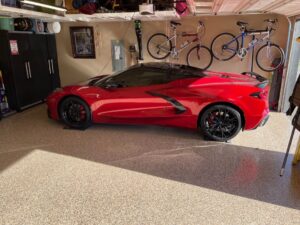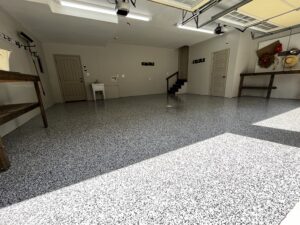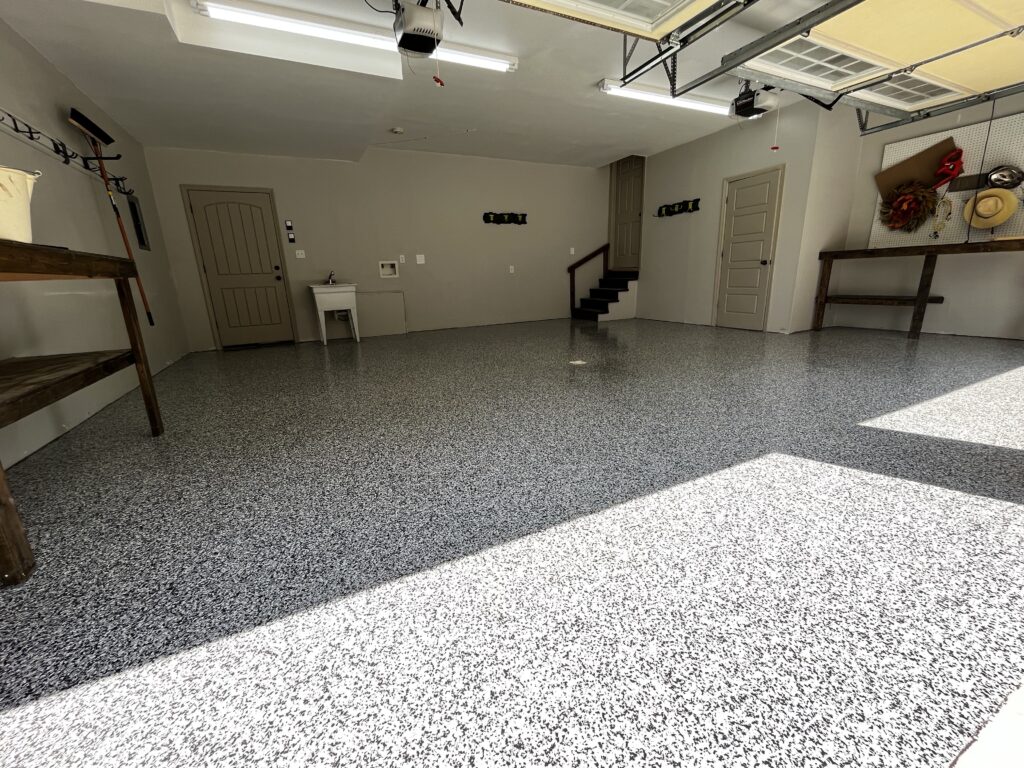
Polyurea is a fast-curing, highly flexible coating that we apply as the first layer, the basecoat, on a garage floor coating system. We use it there because it grips prepared concrete tightly, flexes as the slab moves and shifts with temperature, shrugs off moisture and abrasion, and cures fast enough to keep a one-day install on schedule. That combination is the main reason a polyurea-based floor resists the peeling and bubbling that so often shows up on epoxy-only jobs. Polyurea coatings for garage floors have become the standard we use across Portland, OR and Vancouver, WA, where slabs swing through wet, shifting seasons. Below is a plain-language look at what polyurea is, where it sits in the system, and why it earns the bottom layer.
What Polyurea Actually Is
Polyurea is a type of protective coating known for curing quickly and staying flexible once it’s down. You’ll find the same family of material used to line truck beds and protect industrial tanks, which tells you a lot about how tough it is. According to American Polyurea’s technical overview, that same rapid-curing chemistry is what makes polyurea suitable for demanding industrial and protective-lining applications, not just decorative floors. In floor coatings, that toughness pairs with an important trait: it doesn’t turn brittle. Instead of forming a hard, rigid shell, polyurea keeps a bit of give, so it can move with your concrete instead of cracking away from it.
Because it cures in a fraction of the time of older materials, polyurea also changes the pace of an installation. Layers can go down and set on the same day, which is a big part of how a properly staffed crew can prep and coat a garage floor in a single visit.
Where Polyurea Sits in the Coating System
A quality garage floor coating is a complete system, not a single layer:
- Basecoat (Polyurea): Bonds directly to the properly prepared concrete, creating a strong, flexible foundation for the entire coating system.
- Broadcast Layer (Flake or Color): Adds the decorative finish, whether that’s a granite flake blend for texture or a solid color for a clean, uniform appearance.
- Topcoat (Typically Polyaspartic): A clear protective layer that seals the coating, locks in the flakes (if used), and provides resistance against scratches, stains, UV exposure, and everyday wear.
Get the bottom layer right and the whole floor lasts. Get it wrong and it doesn’t matter how nice the flake looks, because the coating can lift off the slab. That’s why the basecoat choice matters more than most homeowners realize.
Why We Use Polyurea Coatings For Garage Floor
Several characteristics make polyurea an excellent choice for the foundation layer of a garage floor coating system:
- Superior adhesion to concrete: When applied over properly prepared concrete, polyurea penetrates the surface and forms a strong bond. This adhesion is one of the most important factors in preventing peeling and delamination.
- Excellent flexibility: Concrete naturally expands, contracts, and settles over time. A flexible polyurea basecoat moves with the slab instead of becoming brittle and cracking.
- Moisture resistance: Polyurea performs well in environments where concrete is exposed to humidity and moisture vapor, helping maintain a durable bond over time.
- High impact and abrasion resistance: It withstands dropped tools, heavy equipment, vehicle traffic, and everyday garage use without compromising the coating system.
- Fast curing: Polyurea cures quickly, making it possible to complete many professional garage floor coating installations in as little as one day.
A garage floor coating is only as strong as the layer bonded to the concrete. A high-quality polyurea basecoat provides the adhesion, flexibility, and durability needed to keep the entire coating system performing for years.
Polyurea Basecoat vs. Epoxy Basecoat
Epoxy has been the traditional basecoat for decades, and it does bond well. The catch is that cured epoxy is rigid and cures slowly. When the concrete underneath moves, a hard epoxy layer has less give, which is one reason older epoxy-only floors are prone to chipping and peeling over time. Here’s the side-by-side:
| Trait | Polyurea Basecoat | Epoxy Basecoat |
|---|---|---|
| Flexibility | Flexes with the slab | Rigid, less forgiving of movement |
| Cure speed | Fast, supports one-day installs | Slow, often multi-day |
| Moisture tolerance | Higher | Lower |
| Peeling and chipping risk | Lower over time | Higher over time |
| Best role | Foundation basecoat | Budget option or specific interior uses |
None of this means epoxy is a bad product. It still has a place, and we cover its strengths and how it stacks up against polyaspartic on our site. It just isn’t our first choice for the layer doing the hardest structural work.
What This Means for Your Finished Floor
When your floor starts with a polyurea basecoat and finishes with a polyaspartic topcoat, you get a system built to move with your slab, resist moisture, and take years of traffic while staying easy to clean. It’s the same reason this build is our standard for residential garage floor coatings: it holds up in real Pacific Northwest conditions, not just in ideal ones. You get a floor that looks great on day one and still looks great after the seasons turn a few times.
Want a Floor Built on the Right Foundation?
If you’ve had a coating peel before, or you just want it done right the first time, the basecoat is where that promise is kept. Take a look at our gallery of completed floors to see the system in action. We’re a family owned and operated company that installs full polyurea and polyaspartic systems designed for our wet, shifting climate, with every floor built to be durable and easy to clean.
Call (971) 247-9844 or request a quote to talk through your floor. We’re based in Portland, OR and serve the Portland metro, Vancouver, WA, and SW Washington and nearby areas.