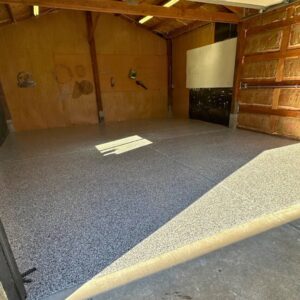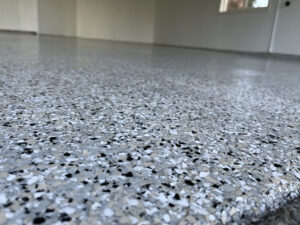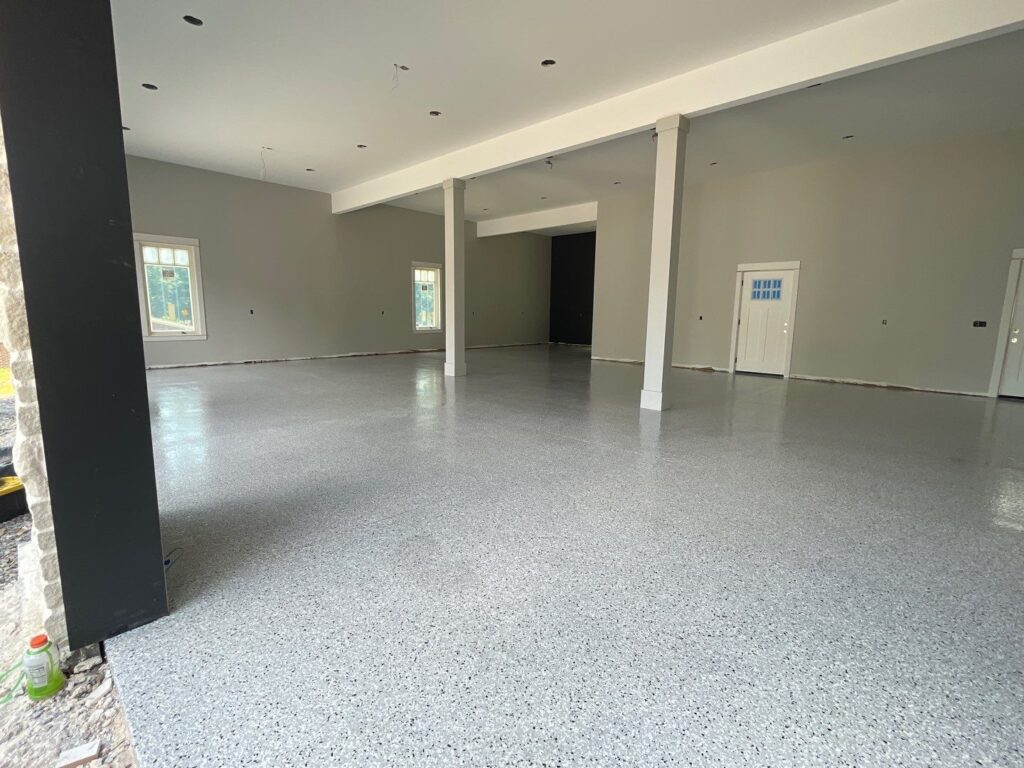
If you’re wondering how long do polyaspartic garage floors last, the short answer is: when installed properly and maintained well, it can easily last 15 to 20 years or more. The exact lifespan depends on installation quality, traffic level, environment (humidity, temperature) and how well you care for it. In this guide you’ll learn what impacts the lifespan, how to keep your floor looking like new, and why choosing a pro with a proven system matters.
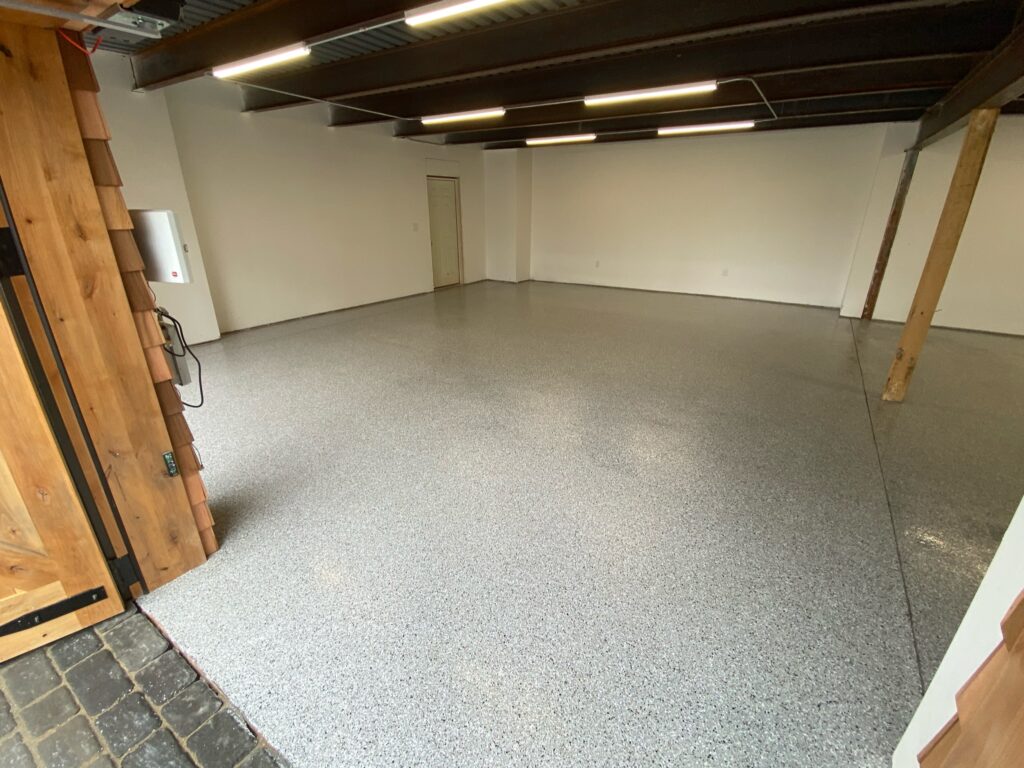
What Is a Polyaspartic Garage Floor Coating?
Polyaspartic coatings are high-performance two-part resin systems that finish with a tough, seamless surface built for heavy use and designed to outperform traditional coatings like epoxy. Unlike standard epoxy systems, they cure in hours, resist UV damage (so no yellowing), and stay looking good for many years.
At Complete Coatings NW we use a refined 4-step system:
- Surface Prep – grinding and repair ensure optimal adhesion.
- Base Coat – a high-solids polyurea or epoxy base for foundational strength.
- Broadcast Flake – adds texture and style while boosting structural resilience.
- Top Coat – UV-stable 100% solids polyaspartic finish that cures fast and holds up for decades.
How Long Do Polyaspartic Garage Floors Last
- A properly installed and maintained polyaspartic coating can last 15 to 20 years in a residential garage setting.
- Some high-end installations report up to 20 to 25 years or more, especially in lower traffic residential settings.
- Many industry sources take a conservative view of 10 to 20 years, noting that “proper preparation and care” are essential.
Why the Range?
Because the lifespan depends on how the floor is used (vehicle traffic, tools, equipment), how well it was installed, and how regularly it is maintained.
Call‑out: Proper installation and regular maintenance extend floor life. Poor installation and neglect shorten it.
Key Factors That Impact Longevity
Installation Quality
- Surface preparation: The concrete surface must be clean, dry, properly profiled (often ground) and free from contaminants. If prep is skipped, delamination or peeling may follow.
- Correct base coat and adhesion: A polyaspartic finish only performs if the substrate is sound and properly treated.
- Application conditions: If ambient or slab temperature, humidity or moisture content are wrong, the coating may cure improperly and wear faster.
Daily Usage & Traffic
- Vehicle traffic, loading/unloading, tools dropping, tire movement—all add stress. Higher usage shortens life.
- Residential garages see moderate use, so a polyaspartic coating in those settings often reaches the upper end of the lifespan range.
Environment & Exposure
- UV light: Polyaspartic coatings resist UV fading or yellowing so even garages with windows or open doors hold up.
- Moisture and temperature swings: Wet concrete, freeze/thaw cycles or salt exposure can stress coatings. Proper prep and system choice matter.
- Chemical exposure: Frequent spills (oil, battery acid, de-icer) need to be cleaned promptly to prevent localized damage.
Maintenance & Care
- Regular sweeping and rinsing to remove grit and debris that scratch the surface.
- Use pH-neutral cleaners; avoid harsh chemicals or abrasive scrubbers.
- Promptly clean up spills and inspect for chips or cracks.
- In heavy use areas, consider periodic touch-ups or reseal options every few years to protect high-traffic zones.
- Bottom line: Maintenance doesn’t just keep the floor looking good, it protects your investment and extends life.
Maintenance Checklist to Maximize Life
- Sweep weekly and rinse/mop monthly with a mild, neutral-pH cleaner.
- Use mats or soft pads under rolling tool chests, heavy equipment or furniture; avoid dragging heavy items across your floor.
- Clean up oil or chemical spills immediately to prevent staining or local damage.
- Avoid using wax, abrasive pads or harsh detergent cleaners.
- Inspect annually for signs of wear: thinning finish, surface dulling, chips, or cracks.
- Consider light touch-up or resealing in heavy-traffic zones every 5–10 years depending on use.
- Keep the floor dry after washing and avoid standing water near the edges or drain lines.
Common Myths & Mistakes That Shorten Life
- Myth: “All garage floor coatings last the same.” Not true. Material choice matters, and polyaspartic systems outperform many epoxies in key longevity measures.
- Myth: “DIY is fine, no difference.” Reality: DIY kits often skip critical prep or use lower grade materials, which shortens life dramatically.
- Mistake: Skipping surface prep or moisture testing leads to poor bonding, peeling or bubbling later.
- Mistake: Using the space too soon or neglecting the curing window can cause early failure.
- Mistake: Ignoring maintenance and letting abrasion or grit accumulate will shorten lifespan.
How Complete Coatings NW Ensures Maximum Lifespan
At Complete Coatings NW we use our signature 4-step system:
- Surface Prep – Grinding and repair ensure optimal adhesion.
- Base Coat – A high-solids polyurea or epoxy base provides foundational strength.
- Broadcast Flake – Adds texture and style while boosting structural resilience.
- Top Coat – UV-stable 100% solids polyaspartic finish that cures fast and holds up for decades.
We also back our work with a lifetime satisfaction warranty, standing behind not just appearance but long-term performance. When you trust us with your garage, you get the best materials, expert installation, and lasting results.
Get a Floor That Lasts for Decades
Ready to transform your garage floor into a space you’ll actually enjoy using?
Schedule your free quote today at (971) 247‑9844 or contact us here. Our one-day install, elevated style options, and lifetime satisfaction warranty mean you’re investing in durability, value and finish that lasts.
Serving Portland, OR and surrounding communities, including Hillsboro, Beaverton, Lake Oswego, Oregon City, Vancouver WA, and nearby areas.
Choose a system built to last, and look great doing it. Read the full article to know more about how long do polyaspartic garage floors last.