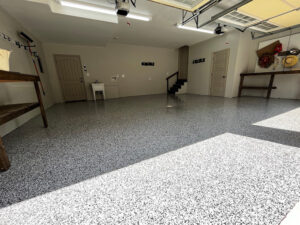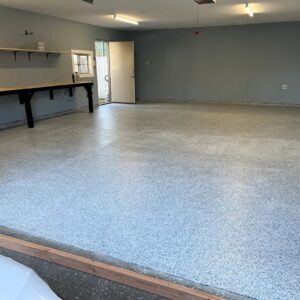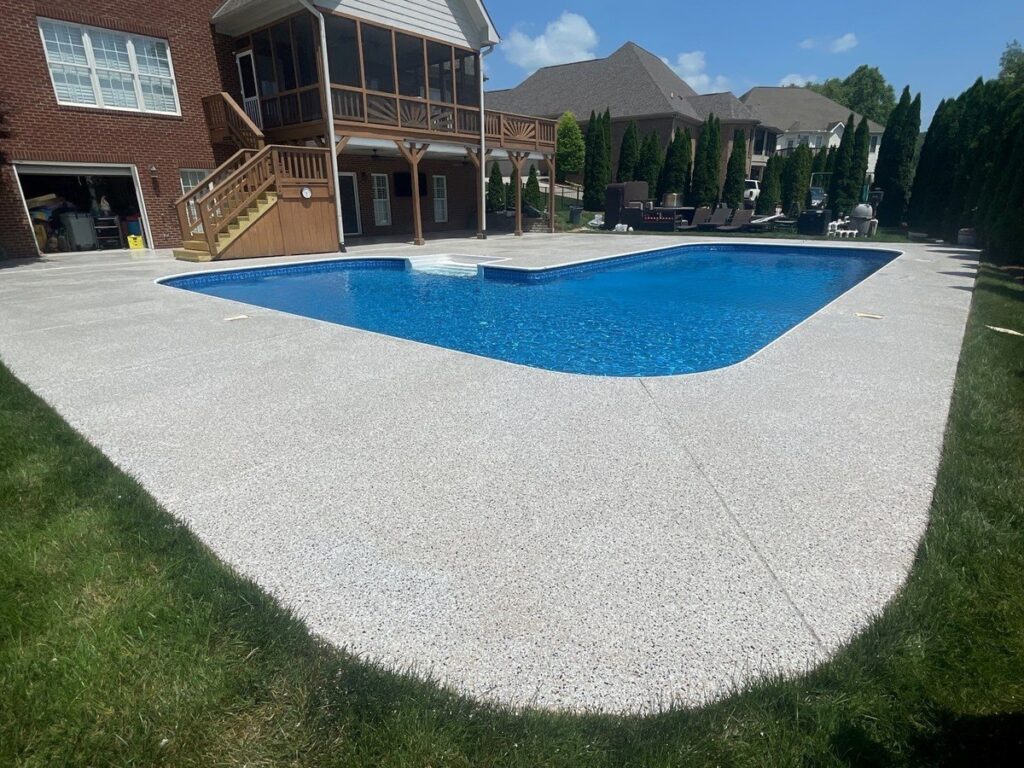
Slippery in October, hot in July, cracking by next spring? That is what bare concrete around a pool delivers in the Pacific Northwest, and it is why coating choice matters more for a pool deck than for any other slab on your property. The right pool deck coating gives you slip resistance when wet, cool-touch surface temperatures in the sun, chemical resistance against chlorine and salt, and PNW freeze-thaw durability for years. The wrong one fails at one of those four jobs and you are barefoot on a problem. Below is an honest comparison of the five pool deck coating options worth considering, what each one actually delivers, and what we install on Portland-area pool decks.
Pool Deck Coating Options at a Glance
| Coating | Slip Resistance | Cool Underfoot | Chemical Resistance | Lifespan | Best Use |
| Acrylic cool deck | Medium-high | Excellent | Medium | 5 to 8 years | Hot, dry climates |
| Standard epoxy | Medium | Poor (rigid, heats up) | High | 5 to 10 years | Covered/indoor decks only |
| Polyaspartic + flake hybrid | High | High | High | 15 to 20+ years | Most residential pool decks |
| Polyaspartic with anti-slip additive | Very high | High | High | 15 to 20+ years | Steep deck slopes, splash zones |
| Rubberized coating | Very high | Very high | Medium | 8 to 12 years | Safety-first, kids and elderly users |
What a Pool Deck Coating Actually Has to Do
Five real-world demands separate a pool deck coating from a regular patio coating or garage floor finish. Any system you consider has to hit all five:
- Slip resistance when wet. Wet feet on smooth surfaces are a real fall risk. The coating needs texture that grips even when submerged or splashed.
- Cool underfoot in summer sun. Bare concrete around a pool can hit 110 to 125°F on a hot August afternoon in Portland. A good coating drops that by 15 to 25 degrees.
- Chemical resistance to chlorine and salt. Pool water splashes onto the deck constantly. Lower-quality coatings break down within a few seasons of chemical exposure.
- Freeze-thaw flexibility. PNW winters cycle through freeze and thaw enough to crack rigid systems. The coating has to flex with the slab.
- UV stability. Direct summer sun yellows non-UV-stable products in a single season. The topcoat has to stay clear.
Hit all five, the deck performs for years. Miss one, you are recoating in 3 to 5 years.
Pool Deck Coating Options Compared
1. Acrylic Cool Deck Coatings
Acrylic cool deck systems have been the traditional pool deck choice for decades, especially in hot, dry climates. They are thin, textured, water-based acrylic coatings rolled or sprayed onto bare concrete.
Pros: Strong heat reflection, good slip texture, lower up-front cost, easy to recoat.
Cons: Thin film wears under heavy traffic, chlorine exposure breaks them down faster than higher-end systems, lifespan tops out around 5 to 8 years before a recoat is needed. Texture profile can trap dirt and lotions.
Best for: Hot, dry climates. Less of a fit for the wet PNW, where freeze-thaw cycles and constant moisture shorten acrylic lifespan.
2. Standard Epoxy
Epoxy floor coatings work well indoors and in covered spaces. On an open pool deck, they have two big problems.
Pros: Strong chemical resistance, excellent bond to concrete, durable film.
Cons: Not UV stable (yellows in a season under direct sun), rigid (cracks with slab movement), can get uncomfortably hot, smooth surface is slippery when wet without aggressive anti-slip additives.
Best for: Covered pool decks, indoor pools, mechanical rooms. Not the right call for an outdoor PNW pool deck.
3. Polyaspartic + Vinyl Flake Hybrid
This is the modern professional standard for outdoor pool deck coatings. A polyurea basecoat is ground into the slab, vinyl granite flake is broadcast across the entire surface to refusal, and a UV-stable polyaspartic topcoat locks everything in.
Pros: Outstanding slip resistance from the flake texture, cool-touch surface due to flake profile reflecting sun in multiple directions, UV stability, chemical resistance to pool water, flexibility for freeze-thaw, one-day install, 15 to 20+ year lifespan.
Cons: Higher up-front cost than acrylic or epoxy, requires professional installation.
Best for: Most residential pool decks in the Portland metro and SW Washington. This is what we install.
4. Polyaspartic with Aggressive Anti-Slip Additive
For pool decks with steep slopes, heavy splash zones, or households with elderly users or kids who run pool-side, a polyaspartic topcoat blended with an aggressive aluminum oxide or silica anti-slip additive maxes out grip.
Pros: Highest slip resistance of any coating option, even when fully submerged. UV stable, chemical resistant, flexible.
Cons: Rougher surface texture can be uncomfortable on bare feet over long sessions. Harder to clean than smooth flake systems.
Best for: Safety-critical zones. Often used as a perimeter strip around the pool with a finer-flake hybrid on the rest of the deck.
5. Rubberized Coatings
Rubberized pool deck systems use recycled rubber granules in a polyurethane or polyurea binder. They create a soft, cushioned, highly textured surface.
Pros: Maximum slip resistance, cushion if someone slips and falls, very cool underfoot, dampens noise.
Cons: Cost is high, lifespan shorter than polyaspartic systems (8 to 12 years), texture traps dirt and requires regular pressure washing, fewer color options.
Best for: Safety-first installations, public or commercial pools, households where falls are a real concern.
Slip Resistance: How the Textures Compare
Slip resistance comes from surface texture, not from the chemistry alone. Here is the practical breakdown:
- Smooth coatings (epoxy, acrylic without additives): Slippery when wet. Avoid for any pool deck.
- Vinyl flake broadcast (polyaspartic hybrid): High traction. Flake creates a textured surface that grips wet feet without being painful to walk on barefoot.
- Anti-slip additives (aluminum oxide, silica): Maximum traction. Rougher feel.
- Rubberized granules: Maximum traction with cushion. Softest underfoot.
For most Portland-area homeowners with a residential pool, the flake hybrid delivers safe slip resistance without the rougher feel of aggressive additives.
Cool Underfoot: What Actually Works
Bare concrete around a Portland pool can hit 110 to 125°F on the hottest August days. Three things drop that:
- Lighter colors. White, tan, and light gray flake blends reflect more sun than dark blues or charcoals. A light flake can run 15 to 25 degrees cooler than dark bare concrete.
- Textured surface. Flake broadcast and rubberized surfaces have less continuous surface area touching your foot at any one time, which feels noticeably cooler.
- Reflective topcoats. UV-stable polyaspartic topcoats reflect more solar radiation than dark, matte concrete.
The combination of a light-colored flake blend with a polyaspartic topcoat hits the cool-underfoot mark for almost every PNW pool deck.
What Holds Up Best in the Pacific Northwest
The PNW puts pool decks through a specific cycle: heavy summer sun and splash, then 8 months of rain, freeze-thaw, and moss. Here is what wins and loses:
- Acrylic cool deck: Designed for Phoenix and Las Vegas, not Portland. Shorter lifespan in wet climates. Skip it.
- Standard epoxy: Yellows under summer sun, cracks with winter freeze-thaw. Not a fit outdoors.
- Polyaspartic flake hybrid: UV stable, chemical resistant, flexible through freeze-thaw, sealed surface that moss cannot grip. Strong fit.
- Polyaspartic with anti-slip: Same PNW performance as the flake hybrid with even higher grip. Strong fit.
- Rubberized: Performs well in PNW but costs more per year of service than polyaspartic hybrid.
What We Install on Pool Decks and Why
For most pool deck coating projects in the Portland metro and SW Washington, we install a three-layer system:
- 100% polyurea basecoat ground into the prepared slab. Sourced direct from the manufacturer. Flexes through freeze-thaw and bonds chemically and mechanically to ground concrete.
- Vinyl granite flake broadcast to refusal for slip resistance, cool-touch surface, and color. The homeowner picks a light-to-medium flake blend from our granite flake color chart.
- UV-stable polyaspartic topcoat that resists yellowing, chlorine, and salt water. Optional aggressive anti-slip additive blended into a perimeter strip if the deck slopes or has heavy splash zones.
Before any of that, we diamond grind the slab, repair cracks with flexible polyurea filler, and test moisture levels. If the slab needs structural work, we walk you through concrete resurfacing first. The full install runs in a single day with the deck usable in 24 to 48 hours.
Get a Pool Deck That Holds Up
Family-Owned PNW Pool Deck Coatings, Installed in One Day
Complete Coatings NW is a family-owned concrete coatings company headquartered in Cedar Hills, OR, serving Portland, Vancouver, and the surrounding Portland metro and SW Washington. Every install includes full diamond grinding, our 100% polyurea basecoat, vinyl flake broadcast for slip and cool-touch, and a UV-stable polyaspartic topcoat that handles chlorine and salt water. Call (971) 247-9844 or request your in-home estimate and we will walk your deck, recommend the right flake blend and anti-slip option for your splash zones, and hand you a written quote.