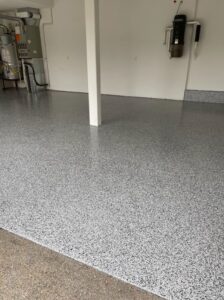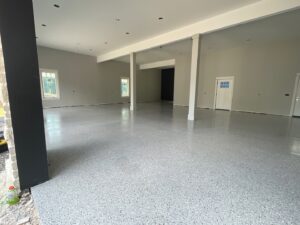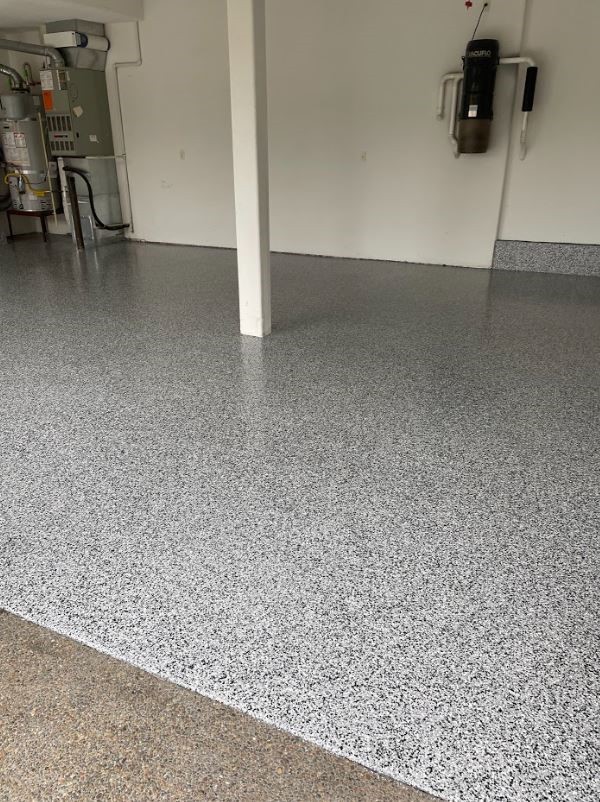
Quick answer: A Vancouver, WA homeowner had us coat a 400 sq ft two-car garage with stained, dusty, hairline-cracked concrete. We installed a 100% polyurea basecoat, broadcast granite flake, and UV-stable polyaspartic topcoat system in a single day. The homeowner walked on the floor the next morning and had both vehicles back in the garage within 48 hours.
This garage floor coating project in Vancouver, WA is a good representation of what most jobs like it look like across Vancouver and SW Washington: an older slab, cosmetic damage, hot tire pickup concerns, and a homeowner who wanted the space to actually feel like part of the house. Here is how it went.
Project at a Glance
| Detail | Info |
|---|---|
| Location | Vancouver, WA |
| Project type | Two-car residential garage |
| Approximate size | 400 sq ft |
| System installed | 100% polyurea basecoat, full broadcast granite flake, polyaspartic topcoat |
| Install time | 1 day |
| Return to service | Foot traffic next morning, vehicle traffic at 48 hours |
The Starting Point
The slab was structurally sound but cosmetically tired. Years of parked cars, road grit, and PNW moisture had left the concrete with embedded staining, surface dusting, light hot tire scuffs, and a few hairline cracks running through the control joints. The homeowner had considered painting it themselves but wanted a professionally installed system that would stand up to Vancouver winters and daily vehicle use. They wanted three things:
- A floor that looked finished, not industrial
- Something easy to sweep and mop, with strong resistance to hot tire pickup
- A one-day install so the garage was back in service quickly
A flake-broadcast polyurea and polyaspartic system checked every box.
The Coating System We Installed
For this project we installed our standard residential floor system. Each layer plays a specific role:
- Polyurea basecoat: 100% polyurea, sourced direct from the manufacturer. It bonds chemically and mechanically to ground concrete and stays flexible through PNW freeze-thaw cycles.
- Granite flake broadcast: Vinyl flake broadcast to refusal into the wet basecoat. Adds color, slip resistance, hides everyday dust, and gives the floor a finished-room appearance. The homeowner picked a neutral mid-tone blend off our granite flake color chart.
- Polyaspartic topcoat: UV-stable, chemical-resistant clear coat. Locks in the flake, resists yellowing from sun coming through the open garage door, and creates the easy-clean surface the homeowner wanted.
Day-of Install Walkthrough
Everything below happened on a single install day with our trained crew on site:
- Diamond grinding the slab. We ground the entire 400 sq ft surface with HEPA-filtered grinders to expose fresh concrete pores. This is the step most coating failures trace back to when it gets skipped or rushed. See our surface preparation and diamond grinding page for more detail.
- Crack and joint repair. We filled the hairline cracks and control joints with flexible polyurea filler so the slab moved as one surface under the new coating. Read about concrete crack repair on our blog.
- Polyurea basecoat application. Rolled out across the prepared slab with the basecoat keying directly into the open concrete pores.
- Flake broadcast. While the basecoat was still wet, the crew broadcast vinyl flake by hand across the entire floor until the surface was fully covered.
- Scrape and vacuum. Once the basecoat cured enough to lock the flake in place, we scraped down the high points and vacuumed the loose flake to leave a smooth, uniform texture profile.
- Polyaspartic topcoat. A clear UV-stable polyaspartic was applied over the flake, sealing everything in and producing the final finished surface.
By late afternoon, the homeowner had a finished floor.
The Result
The garage went from a dingy, dusty utility space to a finished room with a real flake floor that catches light and reads as part of the home. The homeowner can now sweep the floor in five minutes, hose down the occasional spill, and trust that hot tires will stay off the coating in summer. The polyaspartic top stays clear instead of yellowing under the sun that hits through the open door, since polyaspartic’s chemistry doesn’t go through the UV-oxidation reaction that ambers standard epoxy. Cracks are filled and bonded. The slab no longer dusts up the cars and storage bins inside.
The biggest functional win on a project like this is no more concrete dusting. The floor stops shedding fine grey powder onto everything in the garage from day one.
Why This System Works in Vancouver, WA
Vancouver and the rest of SW Washington put concrete through a lot. Wet winters, road salt and grit tracked in by tires, freeze-thaw cycles, and bright summer sun coming through open garage doors. Our polyurea and polyaspartic garage floor coating system was built for these conditions, and it’s a strong match for the region’s climate, which our rainy Portland durability post covers in more depth:
- Polyurea flexes with the slab through Vancouver’s freeze-thaw swings, a movement peer-reviewed research on concrete freeze-thaw damage identifies as one of the most severe threats to concrete durability in cold, wet regions
- Polyaspartic stays clear under direct sunlight from the open door
- Flake adds traction so wet shoes and rainy-day tire tracks stay safe underfoot
- The full system bonds at a level that resists hot tire pickup, the most common DIY epoxy failure
Frequently asked questions
How long does a garage floor coating installation take in Vancouver, WA? Most two-car garages, including this 400 sq ft project, are ground, repaired, coated, and topcoated in a single day, with the surface ready for foot traffic the next morning.
Will a coated garage floor stop concrete dusting? Yes. A sealed, non-porous surface locks in the concrete dust that a bare or deteriorating slab constantly sheds, so it stops landing on cars, tools, and storage bins.
Does this system resist hot tire pickup? Yes. The polyurea and polyaspartic system bonds and cures at a level that resists the lifting and softening that causes hot tire pickup, which is the most common failure point for DIY epoxy kits.
Can this garage floor coating handle Vancouver winters? Yes. The polyurea base stays flexible through freeze-thaw cycles instead of cracking, and the sealed surface keeps moisture, salt, and grit from soaking into the slab.
How much does a garage floor coating cost for a project this size? Cost depends on square footage, slab condition, and flake selection. We walk every garage in person and provide a written quote, since a 400 sq ft slab in good shape prices differently than one needing extensive crack repair.
Want a Garage Floor Like This in Vancouver, WA?
Family-Owned Garage Floor Coatings, Installed in a Day
Complete Coatings NW is a family-owned concrete coatings company serving Vancouver, WA and the surrounding SW Washington and Portland Metro areas. Every garage floor coating install includes full diamond grinding and our 100% polyurea basecoat.
Call (971) 247-9844 or request your in-home estimate and we will walk your garage, talk through color and flake options, and hand you a written quote. If you’ve been searching for a polyaspartic garage floor coating near me, this is exactly the system we’ll walk you through. Browse more finished projects in our project gallery.