Spring is the best time for garage floor coating because daytime temperatures typically stay between 50°F and 85°F, the ideal range for polyurea and polyaspartic coatings to bond and cure properly. It also lines up with spring cleaning, gives installers easy access to repair winter damage like cracks and salt stains, and lets most garages go from bare concrete to a finished floor in a single day before summer projects begin.
Spring is one of the best times of year to install a garage floor coating. The weather is more predictable, temperatures are moderate, and it is the perfect opportunity to repair the wear that winter leaves behind.
After months of rain, moisture, road salt, and temperature changes, garage floors often start to show signs of damage. Stains, small cracks, and surface wear are common. A professionally installed coating seals the concrete, protects it from further damage, and gives your garage a clean, finished look.
Many homeowners choose spring because it sets their garage up for the busy months ahead. With modern polyurea and polyaspartic systems, most garage floor coating projects can be installed in just one day, with coatings curing in as little as 4 to 6 hours. Your garage can go from bare concrete to a durable, great-looking floor before the weekend even starts.
Spring Weather Confirms the Best Time for Garage Floor Coating
Temperature plays a big role in how well garage floor coatings bond to concrete, which is exactly why spring is the best time for garage floor coating in most Pacific Northwest climates.
Most concrete coatings perform best when temperatures stay in a moderate range. During spring, daytime temperatures often fall between 50°F and 85°F. This allows polyaspartic garage floor coating materials to cure evenly and bond properly to the prepared concrete surface. According to the National Concrete Coating Authority, most epoxy systems require a minimum application temperature of 50°F, with optimal performance between 60°F and 90°F, while polyaspartic formulations can extend that range even further.
Cold temperatures can slow down curing, while extreme heat can cause coatings to dry too quickly. Spring weather helps avoid both problems and creates a smoother, longer-lasting finish for any concrete garage floor coating.
Before the coating is applied, installers grind the concrete surface and repair any cracks. This preparation step allows the coating to bond directly to the concrete, creating a floor that is built to handle daily use.
When installed correctly, a garage floor coating can protect your concrete and keep it looking great for many years.
Winter Damage Is Easier to Fix Before Summer Arrives
Winter can be tough on garage floors. Vehicles track in water, road salt, and debris that slowly wear down bare concrete.
By the time spring arrives, many homeowners notice problems like:
- Salt stains
- Surface pitting
- Small cracks
- Oil spots and grime
- Moisture soaking into the concrete
Spring is the perfect window to fix these issues before they get worse, which is one more reason it’s the best time for garage floor coating rather than waiting until later in the year.
During installation, the concrete is mechanically ground and cleaned. Any cracks are repaired before the base coat is applied. This preparation restores the surface and creates the right texture so the coating bonds properly.
Once the coating is installed, the floor becomes sealed and protected from moisture, salt, and chemicals.
Instead of letting winter damage continue to spread, a spring epoxy garage floor coating or polyaspartic coating helps preserve the life of your concrete floor.
Spring Cleaning Makes Garage Coating Projects Easier
For many homeowners, spring already means cleaning and reorganizing the garage. That timing makes it a natural moment to upgrade the floor as well, and it’s part of why spring is the best time for garage floor coating projects overall.
When the garage has already been cleared out for seasonal cleaning, the installation process becomes much easier. Once the space is empty, installers can begin preparing the concrete right away.
A typical coating system includes four main steps:
- Surface preparation with grinding and crack repair
- Application of a polyurea base coat
- Decorative broadcast flakes for color and texture
- A UV-stable polyaspartic top coat for long-term protection
Because modern materials cure quickly, most garage floor coating installations are completed in a single day.
When the work is done, you move everything back into a garage that feels brighter, cleaner, and far easier to maintain.
Prepare for Summer: The Best Time for Garage Floor Coating Pays Off
Spring upgrades help prepare your home for the months when the garage gets used the most, which is exactly why the best time for garage floor coating is before that summer rush begins.
A coated garage floor creates a versatile space that works for many different activities, such as:
- Home gyms
- Hobby workshops
- Organized storage areas
- Automotive projects
- Home improvement workspaces
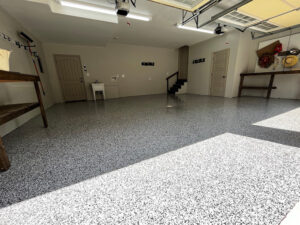
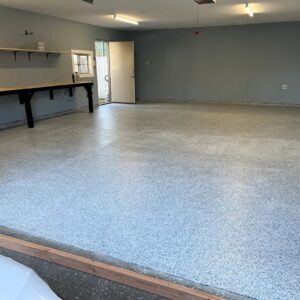
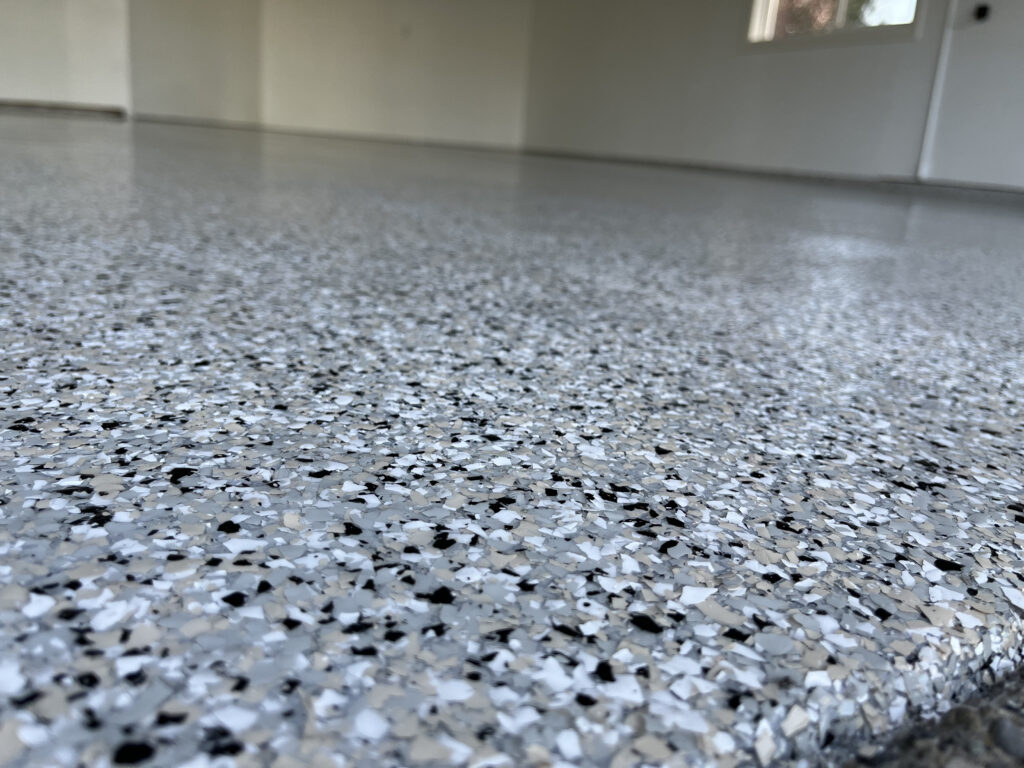
The decorative flake finish also adds visual appeal. Many homeowners say the finished floor makes the garage feel more like a finished part of the home rather than a basic utility space. You can browse flake-finish options on our concrete coatings color chart before your installation.
A professionally coated garage floor can turn an overlooked area into one of the most useful spaces in your home.
The textured surface also improves slip resistance and helps hide dust and small debris, which keeps the garage looking cleaner with very little effort.
Why Polyurea and Polyaspartic Coatings Are a Better Choice Than Epoxy
In the past, many garage floors were coated with epoxy. While epoxy garage floor coating is still used in some situations, newer polyurea and polyaspartic coatings offer major improvements. If you’re weighing your options, our guide comparing polyaspartic vs. epoxy garage floor coatings breaks down which one holds up better over time.
Modern coating systems provide several advantages:
- Up to four times the strength of traditional epoxy
- Greater flexibility that helps resist cracking
- UV stability that helps prevent yellowing
- Faster cure times for one-day installation
- Strong resistance to stains, chemicals, and moisture
These benefits make polyurea garage floor coatings and polyaspartic systems especially well-suited for the weather conditions homeowners experience across Portland, Oregon, and the Pacific Northwest.
Professional systems usually include a polyurea base coat that bonds tightly to the prepared concrete. Decorative flakes are then broadcast into the base layer to create color and texture. Finally, a polyaspartic top coat seals the floor and protects it from wear, sunlight, and moisture.
The result is a garage floor that combines durability with a clean, modern appearance.
Popular flake blends include Domino, Nightfall, Tidal Wave, Cabin Fever, and Obsidian. These finishes add style while helping hide everyday dust and dirt.
Schedule Your Garage Floor Coating Quote
Spring is the ideal time to protect your concrete and upgrade the look of your garage. A professionally installed coating can seal worn concrete, improve durability, and create a space you will actually enjoy using.
Complete Coatings NW installs high-performance garage floor coating systems designed to handle heavy use while maintaining a polished appearance. Homeowners across Portland, Oregon, and nearby communities trust our one-day installation process and long-lasting coating systems. Curious what it costs? Check our garage floor coating cost guide for current pricing factors.
Schedule your free quote today and see how a professionally coated floor can transform your garage.
Call (971) 247-9844 to get started.
FAQ: The Best Time for Garage Floor Coating
Why is spring considered the best time for garage floor coating?
Spring daytime temperatures usually stay between 50°F and 85°F, which is the ideal range for polyurea and polyaspartic coatings to bond and cure evenly. It also gives installers a chance to repair winter damage before the garage gets heavy summer use.
How long does a garage floor coating take to install?
With modern polyurea and polyaspartic systems, most garage floor coating projects are completed in a single day, with coatings curing in as little as 4 to 6 hours.
Can I still get a garage floor coating outside of spring?
Yes. Polyaspartic coatings have a wider temperature tolerance than traditional epoxy, so installation is possible in other seasons. Spring simply offers the most consistently ideal curing conditions.
Is polyaspartic better than epoxy for a garage floor coating?
Polyaspartic and polyurea coatings offer up to four times the strength of traditional epoxy, along with better UV stability and faster cure times, making them a stronger long-term choice for garage floors.
What does garage floor coating preparation involve?
Installers grind the concrete surface and repair any cracks before applying the base coat. This step is essential for proper adhesion, regardless of the season.